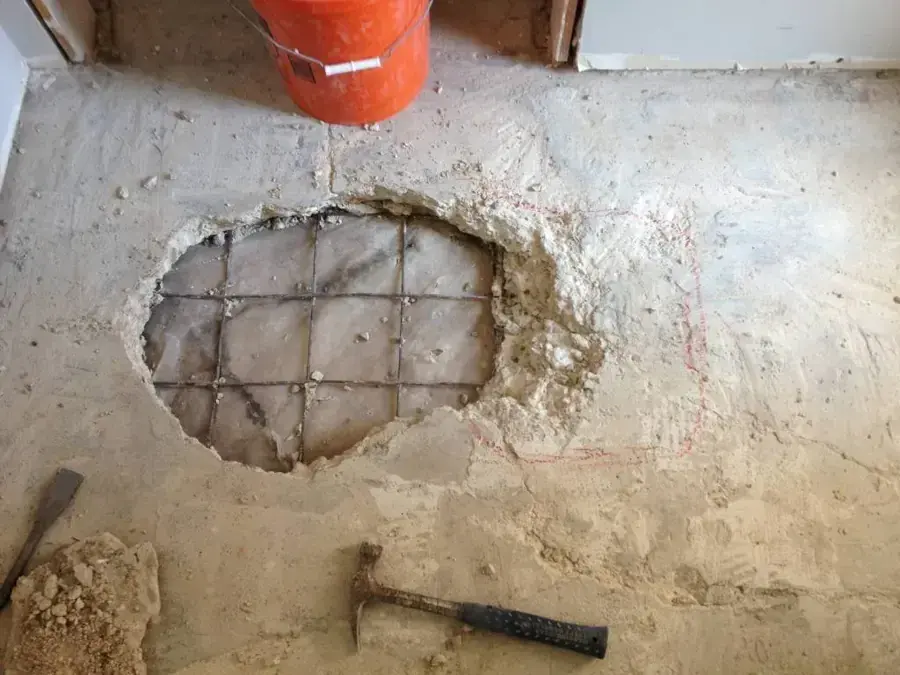
A slab leak starts in a copper supply pipe that runs in or under the concrete floor, so the first sign is often a warm spot underfoot, a climbing water bill or damp carpet along one wall. In Fountain Valley, where most homes are tract houses from the 1960s and 1970s built on concrete slabs, this is a loss the restoration crews see again and again.
Key takeaways
- A warm patch on the floor, the sound of running water with every fixture off, or a rising water bill can point to a leak under the slab.
- Closing the main water valve stops the supply while the cause is traced, and it comes before everything else.
- Wet carpet, pad and flooring come up so the concrete can dry, because trapped water keeps spreading sideways.
- The slab itself is dried with drying mats and dehumidifiers, and moisture readings show when the job is finished.
- A slab leak and a pinhole leak inside a wall are different jobs that need different tracing and different repairs.
Why slab leaks show up in Fountain Valley tract homes
Fountain Valley incorporated in 1957, and most of its homes are single story and two story tract houses from the 1960s and 1970s. They sit on concrete slabs, which means the copper supply pipe for the kitchen, bathrooms and water heater often runs in or under the floor.
Copper is a durable pipe, but it is not permanent. Over decades, tiny pinholes and failed joints can open where the pipe is buried, and the water has nowhere to go but up through the slab or sideways under the flooring.
Because nothing is visible, a slab leak can run for a long time before anyone notices. That is why the early clues matter so much.
Signs the water is coming from under the floor
A leak under a slab rarely looks like a puddle at first. The signs are quieter, and they tend to show up in a few typical ways.
- A warm or hot area on the floor, often near the path of the hot water pipe.
- The sound of water moving in the walls or floor when every tap and appliance is off.
- A water bill that rises with no change in how the household uses water.
- Carpet that feels damp or smells musty along one wall or in one hallway.
- Baseboards that swell or paint that bubbles at the bottom of a wall.
- Cracks or lifted tile that were not there before.
The first steps at home
What a homeowner does right away limits how far the water travels. These steps are simple and safe to do before anyone arrives.
- Close the main water valve for the house so the pipe stops feeding the leak.
- Turn off the water heater if the floor is warm or the leak may involve the hot side.
- Move rugs, shoes, boxes and furniture legs off wet flooring.
- Take photos of damp areas, stained walls and the water meter so there is a record.
- Keep children and pets off wet floors, and stay away from outlets near standing water.
How the leak is traced and the flooring is lifted
Once the water is off, the next question is where it is escaping and how much of the structure has absorbed it.
Finding the source
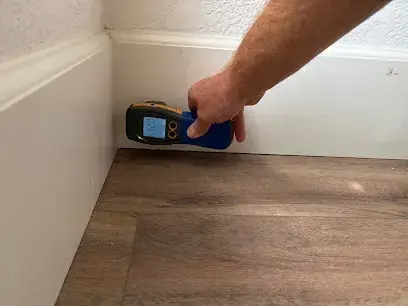
Moisture meters and thermal imaging show where the floor and lower walls are wet, and that map points toward the leaking section of pipe.
A plumber then confirms the exact spot and decides whether the pipe is repaired or rerouted. The restoration work and the plumbing repair are separate jobs, but they are planned together so nothing is covered up too soon.
Lifting the wet flooring
Wet carpet and pad come out first, because pad holds water like a sponge. Laminate, vinyl plank and engineered wood that have taken on water are lifted as well.
Tile and solid wood are checked board by board or tile by tile. Anything that can be dried in place is dried, and anything that has swelled past saving is removed, so the slab is not sealed under a wet floor.
Drying the concrete slab
Concrete looks solid, but it holds a surprising amount of moisture. Water that has gone through a slab leak soaks into the concrete and into the bottom of the walls around it.
That is why a slab job leans on structural drying rather than only on water extraction. Standing water is removed first, and then the building materials are dried on purpose.
- Drying mats pull moisture up out of the concrete through the surface.
- Dehumidifiers lower the humidity in the room so water leaves the slab and the walls.
- Air movers keep air moving across the wall bases and flooring edges.
- Daily readings track the slab and the lower walls until they reach a dry goal.
Slab leak or pinhole leak: why the difference matters
Both problems can start in aging copper, but they behave differently. A slab leak sits under the floor and soaks flooring and concrete, while a copper pinhole leak usually sits inside a wall or a ceiling and stains drywall.
Knowing which one a house has decides where the walls are opened, how the flooring is handled and how long the drying runs. A careful trace avoids cutting into areas that are dry.
After the water is stopped
Once the supply is repaired and the structure is dry, the last step is paperwork and rebuilding. Photos, moisture readings and a record of what was removed help when a claim is filed with an insurance company.
Coverage for slab leaks depends on the policy and the cause, so the wording matters. Homeowners in Fountain Valley who want the full picture of the work can read about slab leak water damage and how the process runs from the first visit to the final readings.
Questions
How can a homeowner tell a slab leak from a leak in a wall?
A slab leak tends to show up as a warm spot on the floor, damp flooring or the sound of water under the house. A wall leak usually stains drywall or paint. A moisture reading and a trace by a plumber give the clear answer.
Is it safe to stay in the house during a slab leak?
Usually yes once the main water valve is closed and the electrical outlets near wet areas are avoided. If the floor is warm or the water is spreading, it is better to call for help before the damage grows.
Will the carpet always be removed?
Wet carpet pad is almost always removed, because it holds water and dries slowly. The carpet itself can sometimes be lifted, dried and reinstalled, depending on how long it stayed wet.
How is the concrete slab itself dried?
Drying mats and dehumidifiers pull moisture out of the concrete and the air, and air movers keep the surface dry. Readings are taken until the slab and the lower walls reach the dry goal.
Does a slab leak always mean the pipe must be replaced?
Not always. A plumber decides between a local repair and rerouting the pipe, depending on the pipe condition and where the leak sits. The restoration crew works around that decision so the structure is dried first.