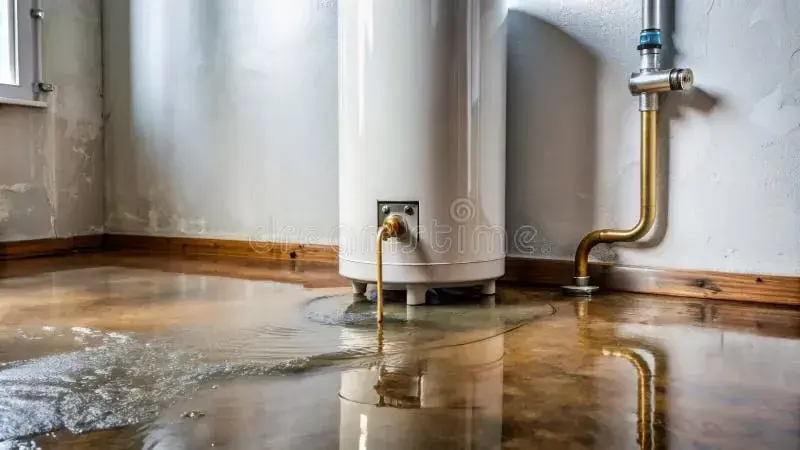
In many Fountain Valley tract homes, the water heater sits in the garage. When the tank starts leaking, the water spreads across the concrete and heads for the shared wall that opens into the house.
Key takeaways
- Turn off the cold water supply to the tank and switch off the power or gas control before anything else.
- A garage tank leak usually spreads across the concrete first, then reaches stored items and the shared wall into the house.
- Cardboard boxes, wood shelves and the bottom of drywall soak up water quickly and need to be moved or checked.
- Standing water is extracted first, and the bottom of the shared wall is opened or dried based on moisture readings.
- A leaking tank is replaced, not patched, and the cleanup and the replacement are planned together.
Why garage tanks leak into the house
Fountain Valley is a city of tract houses from the 1960s and 1970s, and many of those homes keep the water heater in the garage. That placement keeps the tank away from living space, but it does not keep the water away when the tank fails.
The garage slab is flat and open, so a failing tank sends water in every direction. The nearest barrier is usually the shared wall with the house, and that wall is where the damage becomes expensive.
How an aging tank fails
A water heater is a steel tank that is lined to resist rust. Over the years that lining wears down, and small cracks let water reach the steel.
The first sign of trouble is often small, and it is easy to miss when the tank is tucked in a corner of a busy garage.
- Rust stains or a damp ring at the base of the tank.
- Water that weeps from the relief valve or from a fitting on top.
- A tank that rumbles or pops while it heats.
- A damp patch on the garage floor that returns after it is wiped up.
- A tank that is simply old, since age is the biggest risk factor.
What to do when the tank is leaking
The goal is to stop new water and protect what is not yet wet. Each step is simple, and the order matters.
- Switch off the power to an electric tank at the breaker, or turn the control to pilot or off on a gas tank.
- Close the cold water supply valve on the pipe feeding the tank.
- Stay out of standing water if any outlet, cord or appliance is nearby.
- Move boxes, tools, bikes and storage off the floor and away from the shared wall.
- Open the garage door to let air in, and take photos of the tank, the floor and the wall.
Where the water goes after the tank lets go
Water follows the easiest path. In a garage, that path usually has three stops.
Across the concrete slab
Most of the water spreads out on the slab and runs toward low spots and the garage door. Concrete does not absorb quickly, so this part is the easiest to remove.
Into stored items
Cardboard, paper, fabric and wood shelving soak water from the floor and hold it. Items that sit on the slab for a few days can be ruined even if they never looked flooded.
Under the shared wall
Water can wick up the bottom of the drywall and slip under the wall plate into the house. Baseboards, flooring and cabinets on the other side of that wall are the next place to check.
How the cleanup works
A leak that stays in the garage is a smaller job than one that has crossed into the house, so speed matters. The first task is water extraction, which pulls standing water off the slab so it cannot spread further.
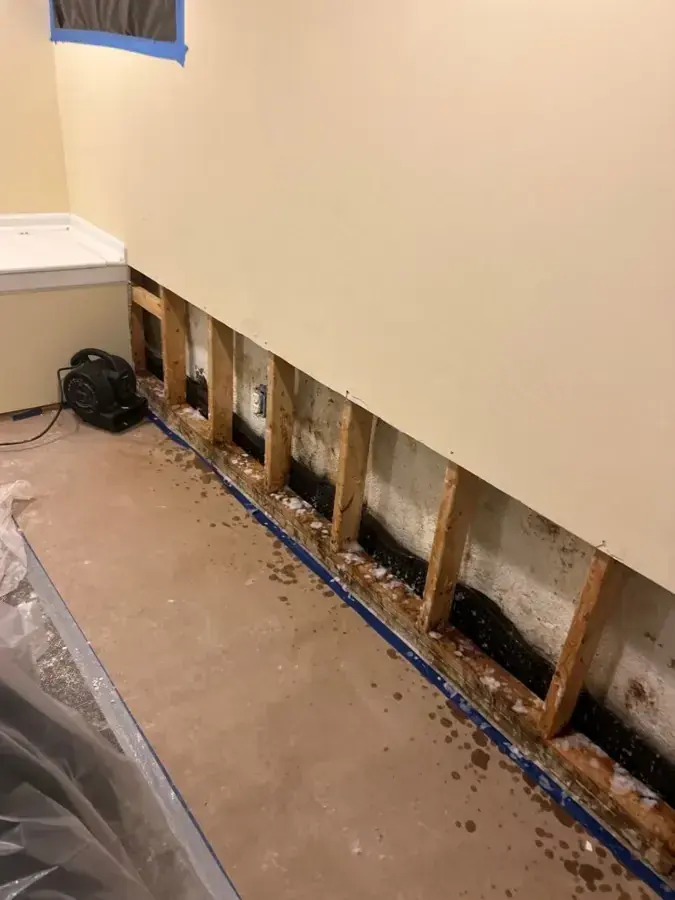
After that, the crew reads the moisture in the shared wall, the baseboards and the floor on the house side. If those readings are wet, the work moves into structural drying so the walls and flooring are dried before anything is rebuilt.
- Drywall at the bottom of the shared wall is cut back when it is soaked.
- Insulation that has taken on water is removed rather than dried in place.
- Air movers and dehumidifiers run until the readings reach a dry goal.
- Stored items are sorted into dry, salvageable and not worth saving.
Replacing the tank and finishing the repair
A tank that leaks from its body cannot be fixed. Patching or sealing it does not hold, so the tank is replaced by a plumber or installer.
The water heater leak cleanup and the replacement work are planned together. That keeps the new tank from being set on a floor or against a wall that has not been dried.
A new tank is a good moment to look at the whole setup, including the shutoff valve, the connections and the floor around it.
Preventing the next leak
A little attention to the tank prevents a lot of damage. A pan under the tank catches small leaks, but it does not hold a full failure, so the tank still has to be watched.
Garages often hold washers and dryers as well, so an appliance leak can follow the same path across the slab. Keeping the area clear of cardboard makes any leak easier to spot and cheaper to clean up.
- Check the base of the tank and the relief valve a few times a year.
- Keep stored goods off the floor on plastic shelves.
- Know where the cold water shutoff for the tank is, and make sure it turns.
Questions
Should the water heater be turned off before the water is shut off?
Both should be done quickly. Switch off the power or gas control so the tank does not heat while it drains, and close the cold water valve to stop new water coming in.
Can a leaking tank be repaired?
A tank that leaks from the body, the seams or the bottom is replaced. A leak at the relief valve or a fitting on top may be a smaller repair, but a plumber decides which.
Does water from a garage leak always reach the house?
No, but the shared wall is the usual weak point. Moisture readings show whether water has crossed into the wall or the flooring on the house side.
What happens to boxes and belongings stored on the garage floor?
Cardboard and paper that sat in water are usually lost. Plastic, metal and glass items can be cleaned and dried, and the crew sorts what can be saved.
How is the garage dried after the water is removed?
Air movers and dehumidifiers run on the slab, the wall base and any opened drywall. Readings are taken until the materials reach a dry goal.
How can a tank leak be told apart from condensation?
Condensation is a light film that forms on cool pipes in warm weather and dries up. A leak keeps returning, leaves rust stains and pools on the floor even when the weather is dry.