Fountain Valley was built out mostly in the 1960s and 1970s, and the drains under those tract houses are now old. When a cast iron drain cracks or a tree root finds a joint in an older sewer lateral, the first sign is often water that will not go down and then comes back up.
Key takeaways
- Sewage that backs up inside a home is contaminated water, and it is cleaned as a sanitation job, not a mop job.
- Cast iron drains and older sewer laterals in 1960s and 1970s tract homes can crack or take in roots from mature street trees.
- Stop using water in the house when several drains slow down or gurgle at once, because every flush adds to the backup.
- Porous materials such as carpet, pad and soaked drywall that touched sewage are usually removed, not dried.
- A camera inspection and a repair of the pipe are separate from the cleanup, and both are needed to stop a repeat.
What makes older Fountain Valley drains fail
The city incorporated in 1957, and most of its homes are single story and two story tract houses from the 1960s and 1970s. Many of them have cast iron drain pipes inside and an older sewer lateral that runs out to the street.
Cast iron rusts from the inside and can crack, flake or sag over decades. A lateral that is old enough can also open at a joint, and that opening is an invitation for roots.
How tree roots get into a sewer lateral
Fountain Valley has mature street trees, and tree roots reach for the moisture inside a sewer pipe. A hairline crack or a loose joint is all it takes.
Once a root is inside, it grows into a mat that catches paper and waste. Water slows down, and then the pipe clogs completely.
- Slow drains in more than one fixture at the same time.
- Gurgling sounds from a toilet when the washing machine drains.
- Water that backs up into a shower or a floor drain after a flush.
- A sewage smell near a cleanout, a floor drain or a bathroom.
- Repeated clogs that return soon after a plumber clears them.
What to do when sewage comes up
The first goal is to stop adding water to a pipe that cannot carry it. The second is to keep people out of contaminated areas.
- Stop flushing toilets and stop running sinks, showers and the washing machine.
- Keep children, pets and anyone with a weak immune system out of the affected room.
- Do not try to clean sewage with a household vacuum, because that spreads contamination.
- Wear rubber boots and gloves if something has to be moved, and wash hands thoroughly afterward.
- Call a plumber to clear the pipe, and call the restoration team for the cleanup.
How a sewage cleanup works
Sewage is treated as the most contaminated category of water. That changes what stays and what goes.
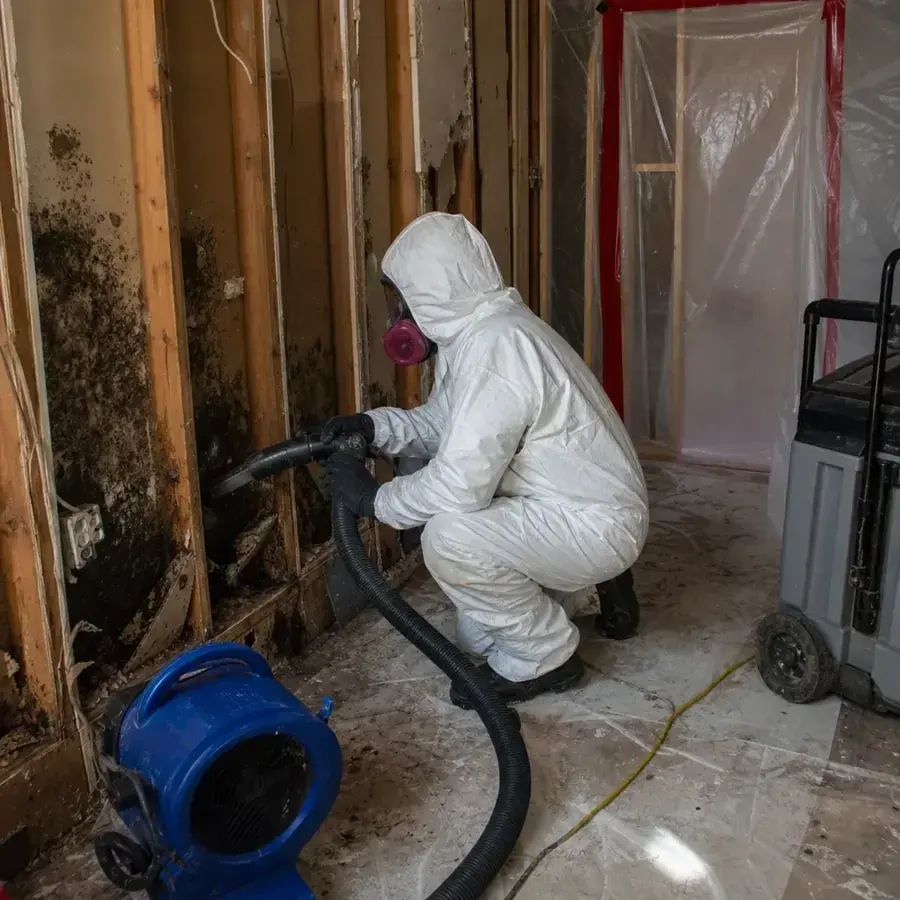
A sewage backup cleanup starts with containment so the contaminated area is sealed off from the rest of the house.
Air scrubbers run during the work so contaminated air stays in the work area and does not drift into the rest of the house.
Removing the contaminated material
Standing sewage is extracted first. Carpet, pad, baseboards and drywall that touched it are removed, because porous materials hold bacteria and cannot be made safe by drying alone.
Cleaning and sanitizing the structure
Hard surfaces and framing are scrubbed with cleaning agents and then treated with an antimicrobial product. Air scrubbers run to clear the air while the work goes on.
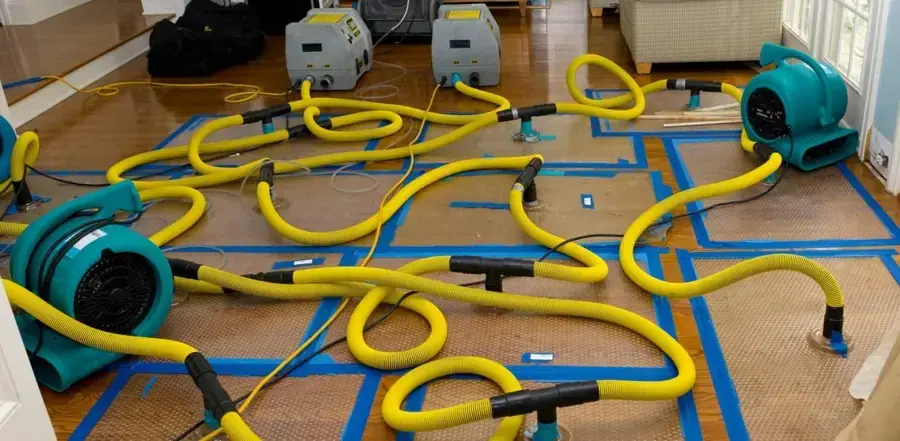
Only then does structural drying begin, so the remaining materials reach a dry goal and the space is ready for rebuilding.
When the problem is a toilet and not the main drain
Not every overflow is a sewer backup. A single toilet that clogs and spills is a smaller loss than a pipe that sends sewage up through several drains.
The cleanup depends on what came out. Clean tank water is a different job from bowl water or waste, which is why a toilet overflow cleanup can be quick when the water is clean and much larger when waste reached the floor.
Fixing the pipe so it does not happen again
The cleanup restores the house, but it does not repair the drain. A camera inspection shows whether the problem is a root, a crack, a sag or a collapsed section.
Depending on what the camera shows, a plumber may clear the roots, repair the pipe from the inside or replace a section. For homes with large trees near the lateral, regular cleaning keeps the pipe clear between repairs.
- Ask for a camera inspection after a backup, not only a snaking.
- Keep a record of the repair, the photos and the cleanup for an insurance claim.
- Think about how close mature trees are to the sewer lateral before planting new ones.
- Keep grease, wipes and paper towels out of drains, even when they are labeled flushable.
Water that came from the floor, not the walls
Backups often show up on a slab floor, where water spreads in a thin sheet. Because many Fountain Valley homes sit on concrete slabs, a sheet of contaminated water can run under baseboards before anyone sees it.
That is why water extraction is done carefully and the walls are checked after the visible water is gone.
Questions
Is sewage water dangerous to touch?
Yes. Sewage can carry bacteria and viruses, so it should be handled with protective gear or left to the cleanup team. Anyone who touches it should wash with soap and water.
Can a homeowner clean a small sewage backup alone?
A very small spill on a hard floor can be cleaned with care and a disinfectant. Anything that soaks carpet, drywall or flooring needs professional removal because those materials hold contamination.
How do tree roots get into a pipe?
Roots follow moisture. A crack or a loose joint in a drain or sewer lateral lets water seep out, and the roots grow in toward it and then thicken inside the pipe.
Why did the backup happen after the plumber cleared the pipe once?
If a root or a crack is still there, the clog returns. A camera inspection shows the cause so the repair can address it.
Does the carpet always have to be removed after a sewage backup?
Carpet and pad that touched sewage are normally removed, because they are porous and cannot be made safe by drying. Hard flooring can often be cleaned and kept.
What if sewage only came up through a floor drain in the garage?
A floor drain backup is still a sewer problem. The area is cleaned and sanitized, and a plumber checks the pipe so the drain does not back up again.