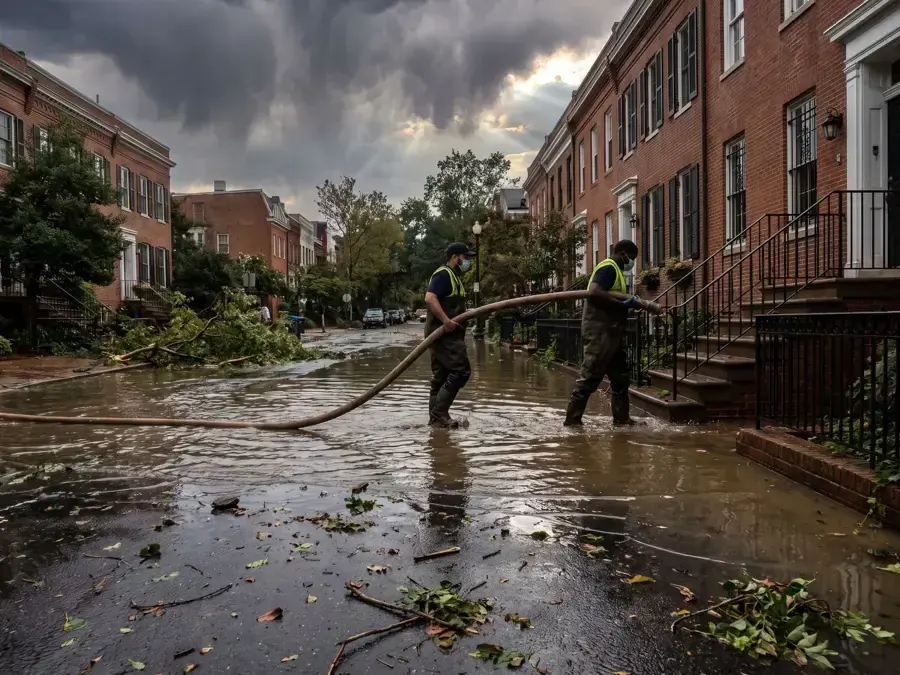
Parts of Garden Grove sit in the Santa Ana River floodplain, and the county has said the channels that drain the area cannot contain the largest storms. When storm water gets into a house, the work moves quickly from pumping to drying.
Key takeaways
- The East Garden Grove-Wintersburg Channel and Ocean View Channel system is part of the Santa Ana River floodplain drainage.
- The county says that system cannot contain the 100-year flood because banks and levees are overtopped at several locations.
- The city runs a searchable flood zone map, and its Planning Services Division answers questions about Zone A and Zone X.
- Storm water that enters a home is treated as contaminated, so porous materials that soaked it are usually removed.
- Extraction comes first, then structural drying runs until readings reach a dry goal.
Why channels matter in Garden Grove
Garden Grove drains toward the Santa Ana River floodplain through a system of channels. The East Garden Grove-Wintersburg Channel and the Ocean View Channel are part of that drainage.
The county has stated that the system cannot contain the 100-year flood, because banks and levees are overtopped at several locations. That is a statement about the largest storms, not a forecast for any particular winter.
Channels do not stand apart from the neighborhoods around them. When a storm is heavy and water cannot move quickly through the system, it looks for low ground in streets and yards.
A flood that Garden Grove has seen before
The 1938 Santa Ana River flood spread across parts of Anaheim, Santa Ana and Garden Grove. It is the best known flood in the history of the area, and it is part of why drainage and flood control are taken seriously today.
A homeowner does not need to know the history to deal with a wet floor, but it helps explain why the city publishes flood zone information.
Reading the city flood zone map
The city runs a searchable flood zone map and a flood zone handout. Its Planning Services Division answers questions about what the zones mean.
The map is a starting point. It shows the zone for a property, and it does not predict how deep water will get inside a particular house.
- Zone A is a FEMA Special Flood Hazard Area.
- Zone X is the other flood zone listed by the city.
- The map can be searched for a specific property.
- Questions about a zone go to the Planning Services Division.
What happens indoors when storm water gets in
Water that comes from outside carries soil, debris and whatever it passed through on the way. That is why it is not treated like water from a clean supply pipe.
Wet cavities behind baseboards often hold water long after the floor looks dry, which is why readings are taken inside walls and not only on the surface.
Extraction comes first
The crew pulls standing water off the floor with pumps and truck mounted or portable extractors. Getting the bulk of the water out early limits how far it climbs into walls and cabinets.
What is removed
Carpet and pad that sat in storm water are removed, because they hold contamination. Drywall that wicked water up from the floor is cut back to a clean, dry height.
Baseboards, insulation and any soaked particle board or cabinets are checked and removed if they cannot be cleaned.
Contents and belongings
Items that soaked contaminated water and cannot be washed, such as upholstered furniture and mattresses, are usually discarded.
Hard items such as plastic, glass and metal can be cleaned and kept, and the crew sorts what can be saved so the owner can decide quickly.
Drying the structure
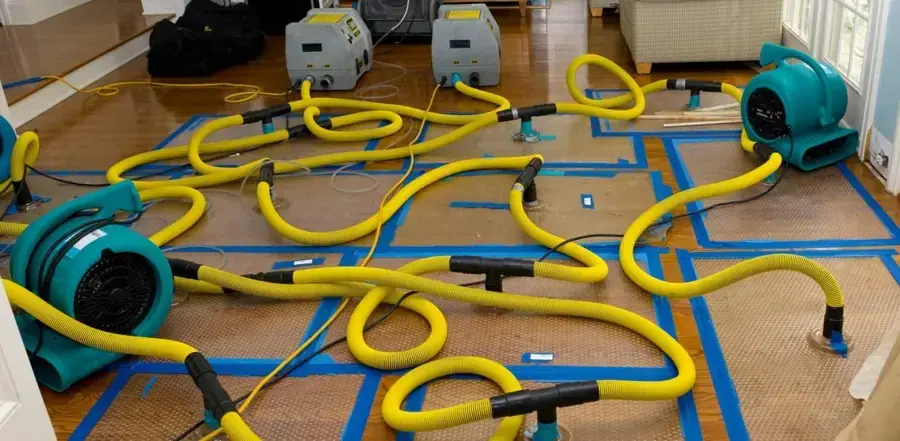
After the wet materials are out, the house still holds moisture in its framing and floor. Structural drying removes it on purpose, with air movers and dehumidifiers placed for the room.
Readings are taken at the start and through the job. The structure is considered dry when the readings reach the dry goal, not when it looks dry.
A job is not finished when the equipment goes quiet. The last readings are compared with dry readings from unaffected parts of the home, and the results are written down.
- Air movers push dry air across wet floors and wall bases.
- Dehumidifiers pull moisture out of the air so it does not return to the materials.
- Wall cavities are opened where readings show trapped water.
- Equipment is moved and adjusted as the readings change.
What a homeowner can do first
A few simple steps protect people and belongings while help is on the way.
- Stay out of rooms with standing water if electrical outlets or cords are near it.
- Turn off power to the affected area at the breaker if it is safe to reach.
- Move furniture, rugs and electronics to dry ground.
- Take photos of the water level, the damage and the outside conditions.
- Do not run a household vacuum on standing water.
Where to read more
The full process for a storm flood cleanup covers extraction, removal and drying in more detail. Residents who want an overview of every water service can start at the Garden Grove water damage hub, and the wider storm flood cleanup page explains the process across the surrounding area.
A flood claim depends on the policy, and flood coverage is often separate from a standard homeowners policy. Checking the wording before a storm makes the claim far easier.
The cleanup is only one part of the recovery. Repairs to flooring, drywall and trim begin once the readings are dry, and the order of the work keeps new materials from being installed over damp framing.
Questions
Is storm flood water considered clean?
No. Water that comes in from outside carries soil and debris and is treated as contaminated, so carpet, pad and other porous materials that soaked it are usually removed.
What does Zone A mean on the city map?
Zone A is a FEMA Special Flood Hazard Area. The city flood zone map and its Planning Services Division can show whether a property falls inside it.
Can the 1938 flood happen again?
No one can forecast that. The county has said the channel system cannot contain the 100-year flood, which is a way of describing the largest storms.
How long does drying take?
It depends on how much water entered and what the structure is made of. Readings decide, and the crew keeps drying until the materials reach the dry goal.
Is flood damage covered by a regular homeowners policy?
Often not. Flood coverage is frequently a separate policy, so the policy wording should be checked.
Should a homeowner wait for the water level to drop before calling?
No. Extraction can begin as soon as it is safe to enter, and the sooner standing water is removed, the less it soaks into the structure.