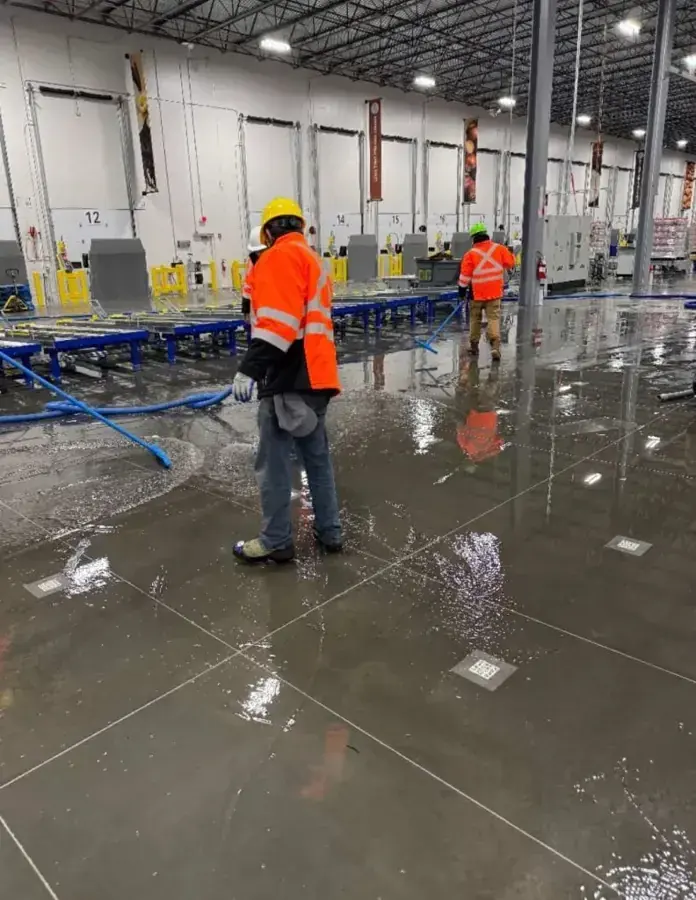
Los Alamitos has business and office streets along Katella Avenue, Los Alamitos Boulevard, Seal Beach Boulevard, Lexington Drive and Corporate Center Drive. When water reaches an office or industrial unit there, the aim is to protect stock and records and to dry the space so work can resume.
Key takeaways
- A business loss is about two things at once: stopping the water and keeping operations moving.
- The first actions are shutting off the source, protecting records and stock, and photographing the damage.
- Extraction comes first, then structural drying is staged so unaffected areas stay in use where possible.
- Ceiling tiles, carpet tiles and drywall are the most common materials removed in an office.
- Documentation of the loss, the work and the readings supports an insurance claim.
Where business water losses happen in Los Alamitos
The city has a mix of medical, office, printing and manufacturing users. UCI Health Los Alamitos sits on Katella Avenue, and employers such as Epson America and Arrowhead Products are part of the local business base.
The buildings differ, but the ways water gets in are similar. A supply leak above a ceiling, a failed drain, a roof leak or a burst fitting can turn a quiet night into a wet morning.
Because so many users share the same few corridors, a loss in one space often touches the neighbors above, below or beside it.
The first actions for a manager or tenant
A calm first response limits the damage and keeps people safe. These steps apply to most commercial losses.
- Shut off the water source if it can be found, or the main valve for the space.
- Switch off power to wet areas at the panel if it is safe to reach.
- Move records, computers and stock to dry areas, or cover them with plastic.
- Take photos and video of the damage before anything is moved.
- Notify the property manager or building owner, since many leases split responsibility.
- Contact the property manager or the building emergency contact right away.
- Tell staff which areas to avoid so wet floors do not cause falls.
Protecting stock, records and equipment
For a business, the value in the room is often worth more than the room itself. Paper records, inventory and electronics are the items to protect first.
Before anything is moved, it helps to know what the business cannot afford to lose. A short list of the most important records, tools and stock lets the crew protect those items first.
Papers and records
Wet paper can often be saved if it is moved quickly and dried carefully. Boxes are lifted off the floor, and wet files are separated so they do not stick together.
Stock and equipment
Inventory on shelves and pallets is lifted or covered. Electronics are unplugged and kept away from water, and a technician checks them before they are powered up again.
How the drying is staged
Commercial drying is planned around the business, not just the building. The goal is to bring wet areas to a dry goal while leaving the rest of the space usable where that is possible.
The work starts with extraction of standing water and moves to structural drying as the visible water is gone.
Moisture readings steer each decision. A wall that reads dry stays closed, and a wall that reads wet is opened only as far as needed.
- Standing water is extracted from carpet, tile and concrete floors.
- Ceiling tiles and wet insulation are removed.
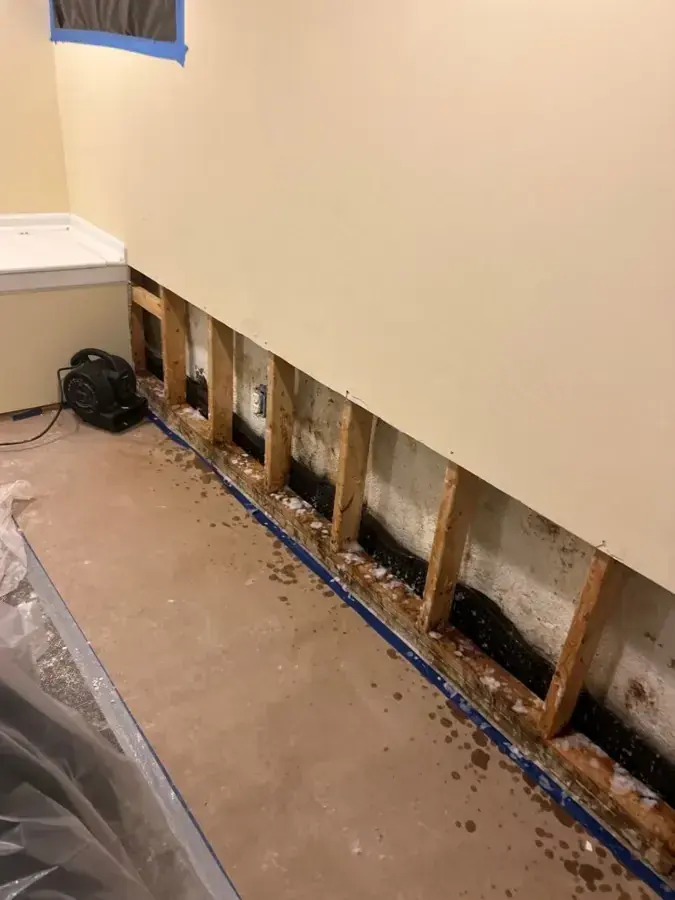
- Walls are opened where readings show trapped moisture.
- Containment keeps dust and moisture away from areas still in use.
- Equipment is placed to dry the space and then adjusted as readings change.
After hours work and keeping the business open
Many offices cannot close for long. A commercial water damage job can be scheduled in phases, with noisy or disruptive steps done after hours.
Open communication with the property manager and neighbors in the building makes that easier, since drying equipment may need access to shared walls and ceilings.
Phased work also helps with insurers and landlords, because each phase has its own record of what was done and why.
Documenting the loss
Records matter as much as repairs on a commercial claim. Photos, moisture readings, equipment logs and a list of removed materials give an insurer a clear picture.
Keeping a copy of the lease, the inventory list and any repair estimates in one place saves time. The wider Los Alamitos water damage hub and the commercial water damage page outline how the whole process runs.
Insurers often ask for the time the loss was found, the source of the water and the steps taken to limit it. Writing those facts down while they are fresh is far easier than rebuilding them weeks later.
Medical, printing and manufacturing spaces
UCI Health Los Alamitos is a medical campus on Katella Avenue, and clinics and offices around it have needs that other spaces do not. Patient privacy, clean areas and equipment that must stay dry all shape how the work is planned.
Printing and manufacturing users keep paper, ink, parts and machinery on floors that are often concrete. Water that pools around pallets and machines is pulled out quickly so stock is not left standing in it.
Once the space is dry, repairs are scheduled so the business can return to normal. Ceiling tiles, carpet tiles and drywall are replaced, and the final readings are kept on file in case a question comes up later.
- Medical areas are kept separated from active work with containment.
- Electronics and lab or office equipment are moved before drying starts.
- Paper stock and packaging on the floor are lifted first, because they absorb water fast.
- Concrete floors are dried with mats and dehumidifiers after extraction.
Questions
Who is responsible for water damage in a leased office?
It depends on the lease and the source of the water. A leak from a building system may be the landlord's responsibility, while a tenant's own equipment may be the tenant's. The lease and the insurance policy decide.
Can the business stay open during drying?
Often, yes. The work can be staged in phases with containment, and noisy steps can be done after hours.
How can wet paper records be saved?
Moving them quickly, separating wet files and drying them carefully can save many records. Items that are valuable or irreplaceable are best handled early.
What should be documented for an insurance claim?
Photos and video of the damage, moisture readings, a list of removed materials and the lease or inventory records.
What if the leak started in the unit next door?
Water often crosses shared walls and ceilings. The source is documented, and the property manager and the insurers sort out responsibility. The restoration work focuses on drying the affected space.
How soon should drying start after a water loss in a business?
As soon as the source is stopped and the space is safe. Water left in carpet, ceiling tiles and walls keeps spreading, so early extraction keeps the job smaller.