Water Extraction in Cypress, CA
Standing water on a Cypress floor soaks into pad, baseboards and subfloor quickly, so the crew pumps it out first and then checks every layer beneath for moisture left behind.
(888) 450-9281Call for water removal in Cypress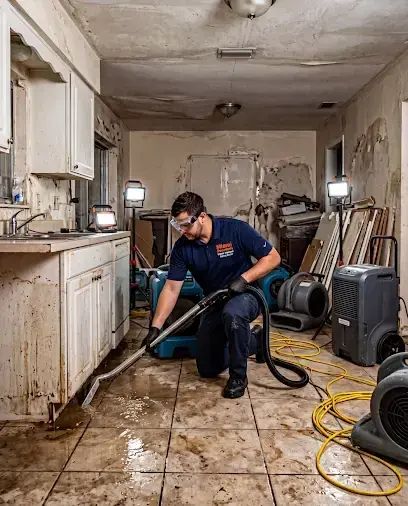
First steps for water extraction and removal in Cypress
- 1
Stop the source
Close the supply valve or fixture shutoff so no new water reaches the floor.
- 2
Move what you can
Lift rugs and electronics out of the water and block the legs of heavy furniture.
- 3
Photograph first
Record water depth and wet items for the insurer before anything is discarded.
- 4
Call for pumping
Describe the source and floor types so the right pumps are loaded.
How water extraction and removal work is done in Cypress
Tract housing from the 1960s build-out gives water a lot of open floor to cross, so a failed supply hose or overflowing tub in Cypress can reach several rooms before anyone finds a mop. The crew's first job is simple: remove the water quickly, because every hour it sits it moves deeper into pad, trim and subfloor. Cypress was once nicknamed Waterville for its artesian wells, yet a tract home has no tolerance for loose water indoors.
What does water extraction and removal cost in Cypress, CA?
Extraction cost depends on how much water there is, whether it is clean, and whether pad and drywall must come out. A single room of clean water costs far less than a floor that took in sewage or sat for days.
One clean room
$900 to $2,500
Rooms across a floor
$2,500 to $7,000
Big loss or waste water
$7,000 to $15,000
Ranges are typical, not a quote: category of water, square footage, material class and how fast drying started move the number most. Run the water damage cost calculator for a closer range.
The water extraction and removal process in four steps
The tech who does the walkthrough maps moisture before any equipment goes down, so the drying plan matches what is actually wet. Equipment stays until the readings say dry, not until it looks dry.
Step 1 Assess the water
Depth, category and floor type are noted before any pump starts.
Step 2 Pump it out
Truck-mounted or portable units pull the standing water from every low spot.
Step 3 Lift and cut
Soaked pad comes out and wet drywall is cut back to dry material.
Step 4 Hand off to drying
Meters check what pumping missed and drying equipment is placed.
Pumping before drying
Truck-mounted units handle large volumes and reach through a door or window with hose, while portable extractors work room by room on carpet and hard floors. The crew then lifts the pad, since it holds water long after the carpet feels firm. Pad rarely recovers after a real flood, while the carpet above can often be cleaned and relaid.
- Truck-mounted units for large volumes through a doorway
- Portable extractors for carpet and hard floors room by room
- Wet pad lifted and removed before drying begins
What happens after the water is gone
Surface water is only part of the loss. Meters and thermal images show where moisture remains in baseboards, wall bases and flooring, and structural drying equipment goes in to pull out what pumping cannot reach. Cabinet bases and door casings get the same check because trapped moisture there goes unnoticed for weeks.
- Thermal imaging to trace wet wall bases
- Baseboards removed where water wicked upward
- Air movers and dehumidifiers set for the room
When the water is not clean
Water from a toilet, a drain or a sewer is not a clean-water loss, and extraction then follows sewage backup cleanup practice with containment, protective gear and removal of porous materials. The crew identifies the source and its category before pumping starts, since that choice decides what is saved.
Water extraction and removal across Cypress and nearby towns
Extraction crews work throughout Cypress, including Oak Knoll, townhomes in Cypress Village and addresses on Lincoln Avenue and Orange Avenue in 90630, with pumps, hoses and run times matched to each building and its floor type.
The same service nearby: water extraction and removal in Fountain Valley, Los Alamitos, Stanton.
Related water damage services in Cypress
Water Extraction and Removal questions in Cypress, CA
Still dealing with it?
Water on a Cypress floor soaks deeper with every hour, so pumping should start early.
(888) 450-9281Call for Cypress water removal01How soon after a leak should water be extracted?
As early as possible, since pad, baseboards and subfloor absorb water steadily and each hour makes the dry-out longer and the demolition larger.
02Can carpet be saved after extraction?
Carpet that only met clean water can usually be cleaned and dried where it lies, though the pad rarely recovers. Waste water changes that, because both layers are discarded.
03Does the crew pump a garage or driveway?
Yes. Garages, laundry rooms and other low areas are extracted the same way, then walls and stored items are checked for wicked moisture.
04What equipment is used?
Truck-mounted units, portable extractors, submersible pumps for deep water and moisture meters that confirm the floor is ready for drying equipment.
05Is extraction enough to finish the job?
Rarely. Pumping removes surface water, but materials stay wet, so drying equipment and readings are needed to confirm the structure is truly dry.
06Who is called when the water is dirty?
The same dispatcher sends a crew trained for contaminated water, with protective gear and containment, and the plumber is brought in for the source.
Pumps and meters get Cypress floors dry faster than towels ever will
The dispatcher records the water source, the floor types and how many rooms are wet, then sends the extraction crew.