Slab Leak Water Damage in Garden Grove, CA
Water from a pipe under the floor soaks flooring and wall bases before anyone notices. The drying team lifts what is ruined and dries the floor until the meters say dry.
(888) 450-9281Warm spot or damp carpet? Get the drying started today.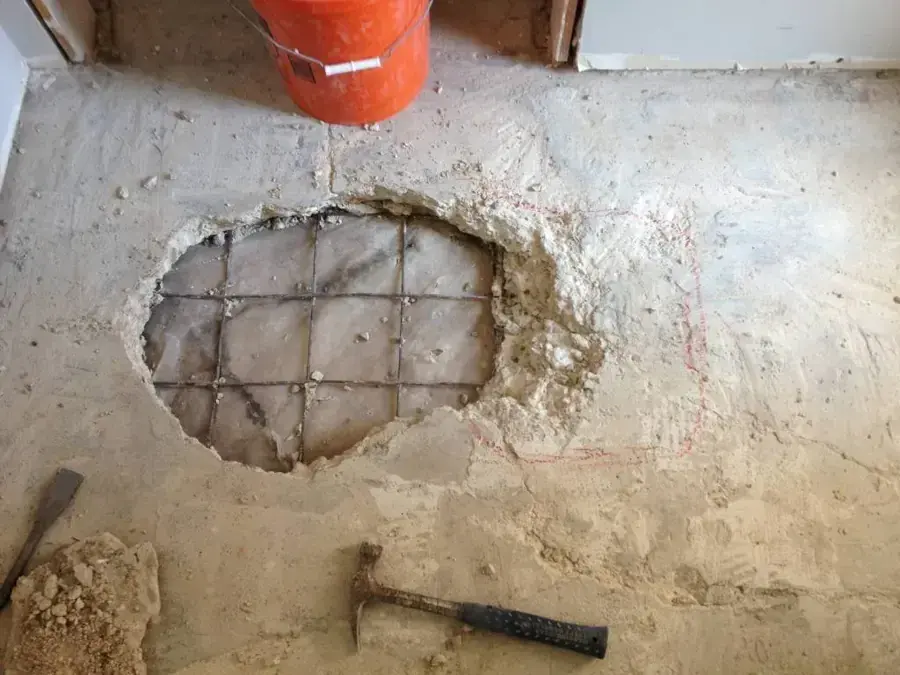
First steps for slab leak water damage in Garden Grove
- 1
Close the main
When the floor is wet or the meter keeps spinning, turn off the main valve for the home.
- 2
Find the warm spot
Feel the floor in socks and note any warm or damp area so the walkthrough begins there.
- 3
Take floor photos
Photograph damp carpet, raised planks and stained baseboards before moving furniture.
- 4
Call for drying
Hidden water keeps spreading under flooring and into walls until the pipe is repaired and the floor is dried.
How slab leak water damage work is done in Garden Grove
A leak under the floor stays hidden the longest. Water from a supply pipe below the flooring creeps under carpet pad, laminate and vinyl plank and climbs into the base of the walls for days or weeks. In Garden Grove, a city of 171,949 people where 43.0% of homes were rented in 2010, that often means a tenant notices damp carpet before anyone finds the source, and the water may already be under a shared wall. The usual signs are a warm spot on the floor, a damp edge along a baseboard or a water meter that keeps turning with every fixture off.
What does slab leak water damage cost in Garden Grove, CA?
In Garden Grove, CA, slab leak water damage restoration typically runs $2,200 to $20,000 for drying and tear-out alone, with the plumbing repair priced separately; the wet floor area, the flooring and how long the leak ran set the number.
One room of flooring
$2,200 to $5,500
Several rooms
$5,500 to $12,000
Long-running leak
$12,000 to $20,000
Ranges are typical, not a quote: category of water, square footage, material class and how fast drying started move the number most. Run the water damage cost calculator for a closer range.
The slab leak water damage process in four steps
The tech who does the walkthrough maps moisture before any equipment goes down, so the drying plan matches what is actually wet. Equipment stays until the readings say dry, not until it looks dry.
Step 1 Trace the wet area
A thermal camera and pinless meters follow the water to the edge of the wet floor.
Step 2 Pull what cannot be saved
Wet pad, swollen trim and soaked plank are photographed, then removed.
Step 3 Dry the concrete
Drying mats and a desiccant unit draw water out of the floor and the wall bases.
Step 4 Confirm dry
New flooring waits until the readings equal the dry reference reading.
Mapping how far the water spread
The walkthrough begins at the wettest reading and moves outward with a pinless meter and a thermal camera, flagging each wet section of floor and each wall base that reads high. The structural drying plan is built from that map. Water under a floor follows the concrete beneath interior walls into closets, halls and the next room, and in a duplex or condo it can reach the unit next door.
- Moisture map of the floor, the baseboards and the lower drywall
- Thermal imaging to follow the warm path of a hot water leak
- A dry reference reading from a room that never got wet
Lifting flooring and drying the floor
Pad that sat wet for days is thrown out, though the carpet on top can sometimes be dried and put back. Laminate and vinyl plank trap water underneath, so the wet runs are pulled. With the floor open, the drying team lays mats or runs a desiccant dehumidifier, since concrete releases water slowly. The water extraction comes first when water is standing.
- Mats pull water up out of the floor surface
- Desiccant units dry the air further than an LGR unit
- Baseboards come off so air reaches the wall cavity
Timing it with the plumbing repair
A plumber finds and repairs the pipe, often by running a new one overhead instead of breaking the floor. Drying ahead of that repair just invites the floor to get wet again, so the drying schedule follows the plumber's. The claim file notes the date the leak was found, each daily reading and the photos taken before any tear-out.
Slab leak water damage across Garden Grove and nearby towns
The Garden Grove restoration crew covers ZIP 92840 to 92846, from West Garden Grove and Historic Main Street to Little Seoul, Buena Clinton and the homes along Brookhurst Street, Chapman Avenue and Garden Grove Boulevard.
The same service nearby: slab leak water damage in Fountain Valley, Stanton, Cypress.
Water damage restoration in Garden Grove · every town covered
Related water damage services in Garden Grove
Slab Leak Water Damage questions in Garden Grove, CA
Still dealing with it?
Leak under the floor in your Garden Grove home? Get it dried out.
(888) 450-9281Garden Grove slab leak drying01How do I know a leak under the floor caused the water?
Look for a warm patch on the floor, damp carpet with nothing leaking above it, the sound of water with every tap off, or a meter that keeps moving. Leak detection by a plumber confirms the source.
02Does the whole floor have to come up?
No. The moisture map shows which runs are wet, and only those come up. Flooring that reads dry stays down.
03How long does the floor take to dry?
Concrete gives up water slowly. A small wet area often needs four to six days on mats or a desiccant, and a big or long-running leak takes longer. The meters decide.
04What if the water reached the unit next door?
The walkthrough reads both sides of the shared wall and documents it, so each owner and insurer can see where the water went.
05Who repairs the pipe?
A plumber. Many hidden floor leaks are fixed by rerouting the pipe overhead or through a wall. The drying team takes care of the water damage around the repair.
06Is a slab leak covered by insurance?
Policies often pay for the water damage and for reaching the pipe, but not for the pipe itself. Coverage depends on your policy, so check with your own insurer.
Wet floor from a hidden leak in Garden Grove? Call before the water reaches the subfloor.
Hidden water keeps spreading under flooring and into the walls until the pipe is fixed and the floor is dried.