Slab Leak Water Damage in Stanton, CA
A damp, warm or musty floor can point to a supply pipe leaking under concrete, and crews in Stanton map the moisture, lift the flooring and dry the slab with mats.
(888) 450-9281Get a Stanton slab leak crew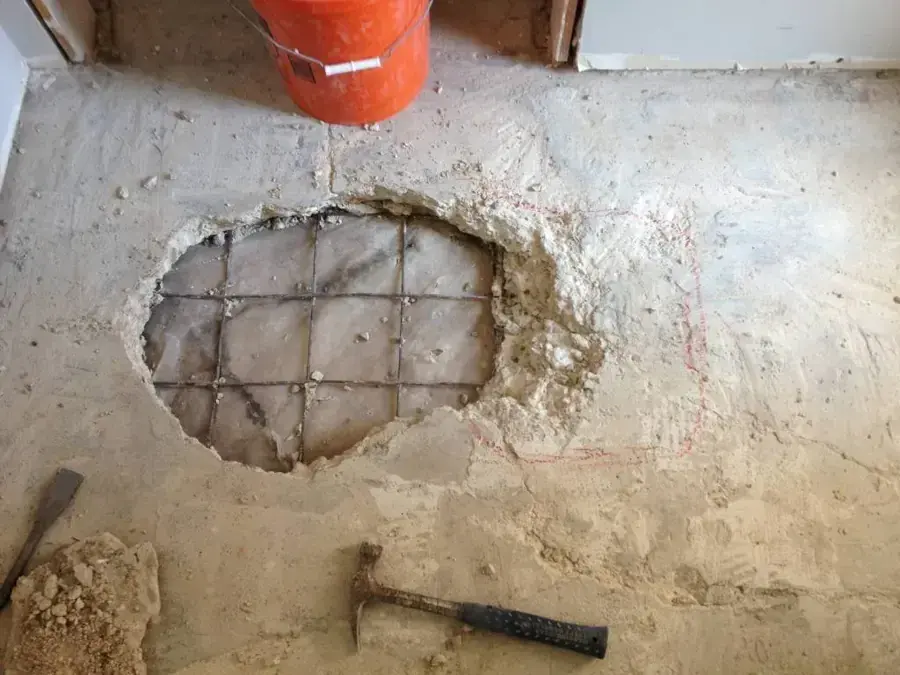
First steps for slab leak water damage in Stanton
- 1
Shut off the supply
Close the main shutoff and check the water meter. If it still moves with every fixture off, a supply pipe is leaking somewhere.
- 2
Look at the floor
Note warm spots, damp carpet and lifting planks, and keep rugs and furniture off the wet area.
- 3
Photograph the floor
Take wide and close photos of every wet or buckled area before anything gets moved.
- 4
Call for drying
Ask for moisture mapping and concrete drying while a plumber schedules the repair.
How slab leak water damage work is done in Stanton
A slab leak is a break in a supply pipe that runs beneath a concrete floor, so the water has nowhere to go except up through cracks and joints into the flooring above. Stanton's foundation types are not something a crew should assume, which is why the first visit confirms what the floor is built on before any plan is set. Technicians then read flooring, baseboards and lower walls to learn how far the moisture has spread. Water extraction comes first whenever water is standing.
What does slab leak water damage cost in Stanton, CA?
A slab leak dry-out in Stanton runs from $2,200 to $5,500 for a single room up to $12,000 to $20,000 for a long-running leak, and the figure depends on how much flooring comes up and how deep the moisture sits.
One room of flooring
$2,200 to $5,500
Several rooms
$5,500 to $12,000
Long-running leak
$12,000 to $20,000
Ranges are typical, not a quote: category of water, square footage, material class and how fast drying started move the number most. Run the water damage cost calculator for a closer range.
The slab leak water damage process in four steps
The tech who does the walkthrough maps moisture before any equipment goes down, so the drying plan matches what is actually wet. Equipment stays until the readings say dry, not until it looks dry.
Step 1 Map the wet area
Meters and a thermal camera mark every wet surface on a floor sketch.
Step 2 Open and expose
Flooring, padding and wet baseboards come out so the concrete can release water.
Step 3 Dry the concrete
Mats, dehumidifiers and desiccant units draw water out of the slab.
Step 4 Confirm and close out
Final readings are logged against dry goals before equipment is removed.
What the first walkthrough looks for
Warm spots underfoot, the sound of water at night, damp carpet near walls and an unexplained jump in the water bill all suggest a supply pipe leaking below the floor. A thermal camera and a moisture meter show where the wet area starts and stops, and the plumber's repair is coordinated with the drying so neither delays the other.
- Thermal scans trace the warm path of the leaking pipe across the floor.
- Meters read flooring, padding, baseboards and lower drywall.
- Photos record each wet room before anything is lifted.
How the concrete gets dried
Concrete holds water far longer than drywall, so the dry-out leans on drying mats, low-grain dehumidifiers and sometimes desiccant units rather than air movers alone. Flooring that traps moisture, such as laminate or glued wood, usually has to come up so the slab can release what it holds.
- Mats pull moisture out of the surface of the slab.
- Desiccant units work on slow, deep concrete moisture.
- Daily readings decide when the equipment can leave.
When a slow leak needs extra attention
A leak that has run for weeks can soak cabinets, baseboards and the base of walls, and in an attached building the water may reach the next unit. Technicians read the adjoining rooms and walls, and structural drying explains how larger losses are handled. Where the leak sits under a kitchen or bathroom, cabinets and vanity bases are checked at the toe-kick, because trapped water behind them dries slowly and can stain framing long after the floor feels dry.
Slab leak water damage across Stanton and nearby towns
Slab leak crews work across Stanton, from Beach Boulevard and Katella Avenue to the side streets off Knott Avenue and Magnolia Avenue, in houses, apartments and condos. The Stanton water damage hub lists everything the crews handle.
The same service nearby: slab leak water damage in Fountain Valley, Cypress, Garden Grove.
Related water damage services in Stanton
Slab Leak Water Damage questions in Stanton, CA
Still dealing with it?
Floor feeling warm or damp? A Stanton crew can map the moisture and open the area.
(888) 450-9281Call a slab leak crew01How can a slab leak be confirmed?
Warm floor patches, the sound of running water with every fixture off, a moving water meter and damp carpet along the walls point to one, and a plumber's pressure test settles the diagnosis.
02Does the slab have to be broken open?
Restoration crews do not break concrete. A plumber decides whether to repair or reroute the pipe, and the dry-out follows that repair.
03Why does flooring have to come up?
Laminate, glued wood and carpet padding hold moisture against the slab, so removing them lets the concrete release water and lets meters read the real surface.
04Can a slab leak affect a neighbor?
In attached buildings, moisture can follow shared walls and floors, so technicians read adjoining areas and the insurance file records what was found.
05Is concrete slower to dry than drywall?
Yes. Concrete releases water gradually, which is why mats and desiccant equipment are used and why the readings, not a calendar, decide the end.
06Does insurance pay for a slab leak?
Policies vary on slab leaks and on the pipe repair itself, so the adjuster should see the photos and readings from the first visit.
A slab leak keeps feeding the floor until the pipe is fixed and the concrete dries.
Stanton crews bring mats, dehumidifiers and meters to the job, and the readings are logged until the slab reaches its dry goals.