Slab Leak Water Damage in Seal Beach, CA
A leaking pipe under a concrete floor wets the flooring above it long before a stain shows. Crews pinpoint the wet area, lift what is soaked and dry the slab with mats.
(888) 450-9281Call for slab leak drying in Seal Beach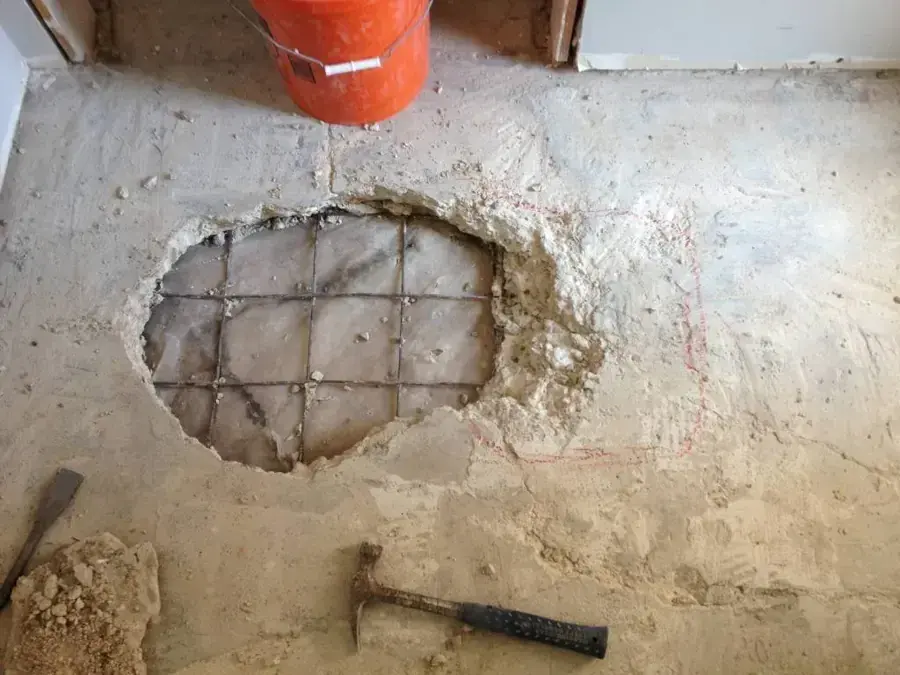
First steps for slab leak water damage in Seal Beach
- 1
Shut the main
Close the home's main water valve to stop the leak feeding the slab. A plumber confirms the source afterward.
- 2
Move belongings up
Lift rugs, boxes and furniture off wet flooring and set them on dry surfaces or blocks.
- 3
Photograph the floor
Photograph damp patches, lifted flooring and the water meter reading before anything changes.
- 4
Call for drying
Call so the crew can map the wet floor and set mats and dehumidifiers before more material is lost.
How slab leak water damage work is done in Seal Beach
A slab leak is a break or pinhole in a pipe that runs under or inside a concrete floor. Because the pipe is pressurized, it keeps pushing water out, and the water finds the weakest path: under flooring, along baseboards and into the lower drywall. Owners usually notice a warm patch underfoot, a damp corner, flooring that lifts or a water bill that climbs with no visible cause. Left alone, the moisture also feeds odor and swelling in cabinets and trim. Crews working in Seal Beach start by confirming that the water is plumbing water and then mapping how far it traveled.
What does slab leak water damage cost in Seal Beach, CA?
Cost climbs with the number of rooms, the length of time the leak ran and whether the water stayed clean. The three cards show typical ranges for a slab leak cleanup, which an estimate then narrows after the moisture survey.
Single room floor
$2,200 to $5,500
Several rooms affected
$5,500 to $12,000
Long-running leak
$12,000 to $20,000
Ranges are typical, not a quote: category of water, square footage, material class and how fast drying started move the number most. Run the water damage cost calculator for a closer range.
The slab leak water damage process in four steps
The tech who does the walkthrough maps moisture before any equipment goes down, so the drying plan matches what is actually wet. Equipment stays until the readings say dry, not until it looks dry.
Step 1 Trace the leak
A meter and thermal camera map the wet area while a plumber confirms the pipe break.
Step 2 Strip soaked layers
Soaked pad, laminate and trim come out, and lower drywall is cut where readings stay high.
Step 3 Dry the slab
Mats, air movers and dehumidifiers run together until the slab releases its moisture.
Step 4 Confirm dry
Final readings are logged, equipment is removed and the owner receives the record.
How the wet area is found
Moisture meters and thermal imaging show where heat or dampness rises through the floor, and the readings are marked on a floor sketch. A leak detection plumber confirms the pipe break, and the crew starts drying once the water is shut off. Crews also check the cabinet bases and the lower walls, because water that slips under flooring often shows up there first.
- Meter sweeps across the whole floor, not only the damp spot
- Flooring edges lifted to see how far the water spread
- Neighboring rooms read before any equipment is set
What gets removed and what is saved
Carpet pad, laminate and engineered flooring soak up water and rarely recover, while tile and some hardwood can stay once the slab beneath is dried. The crew separates salvageable material from the rest before any demolition begins, and water extraction handles any standing water first.
- Baseboards removed so wall bottoms can breathe
- Lower drywall cut only where readings stay high
- Cabinet toe-kicks opened to dry the base
Drying the concrete itself
Concrete holds water far longer than drywall, so drying mats pull moisture upward while dehumidifiers remove it from the air. Larger slab areas may call for desiccant units under a plan like structural drying. Equipment stays until the slab reads dry, closing readings are compared with an unaffected area of the same floor, and the crew documents each visit for the claim file.
Slab leak water damage across Seal Beach and nearby towns
Crews handle slab leak cleanup across Seal Beach, from Old Town and College Park East to Leisure World and the neighborhoods along Seal Beach Boulevard and Pacific Coast Highway, and the dispatcher confirms the address on the call.
The same service nearby: slab leak water damage in Fountain Valley, Los Alamitos, Cypress.
Related water damage services in Seal Beach
Slab Leak Water Damage questions in Seal Beach, CA
Still dealing with it?
Describe the damp floor and the dispatcher explains what the crew does first.
(888) 450-9281Slab leak drying, Seal Beach01How do I know if a slab leak is wetting my floor?
Warm spots, a damp or cupped floor, the sound of running water with every fixture off and a rising water bill are the common signs. A moisture meter confirms whether the dampness is plumbing water.
02Does the concrete need to be broken open?
Not for drying. Plumbers decide whether to reroute or open the slab to fix the pipe, and the drying crew then works around that repair.
03Will the flooring have to be replaced?
Carpet pad and laminate usually go. Tile and some hardwood can stay when the slab dries. Readings after the first visit show which materials are recovering.
04Is a slab leak covered by insurance?
Many policies cover the resulting water damage but not the cost of repairing the pipe itself. Coverage varies, so the adjuster confirms what applies, and the crew's records support the claim.
05How is concrete dried?
Drying mats draw water up from the slab and dehumidifiers pull it from the air. Dense concrete dries slowly, so readings decide when the equipment leaves.
06Can water reach the neighbors' units?
In a condominium or townhome, yes, through shared walls and the floors beneath. The crew reads adjoining units when the building allows and reports to the manager.
Warm floor or rising water bill in Seal Beach? Get the slab checked before flooring fails.
The crew locates the wet area, dries the slab and flooring, and keeps a written record the insurer can follow.