Structural Drying and Dehumidification in Seal Beach, CA
Water that is extracted still leaves wet framing, drywall and flooring behind. Crews set air movers and dehumidifiers by room and wet area, take readings every visit and keep going until each material reaches its dry goal.
(888) 450-9281Call for structural drying in Seal Beach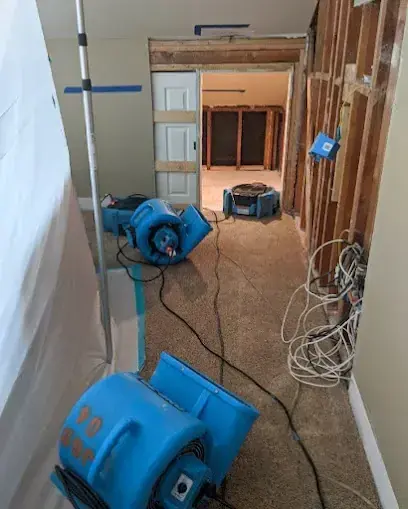
First steps for structural drying and dehumidification in Seal Beach
- 1
Keep doors closed
Closed doors and windows let dehumidifiers work on less air.
- 2
Leave equipment running
Do not switch off or move air movers, which are placed on purpose.
- 3
Expect some noise
Warm, noisy rooms are normal, and a tripped breaker or odd smell should be reported.
- 4
Call about readings
Call to schedule the visit that checks the moisture and adjusts the equipment.
How structural drying and dehumidification work is done in Seal Beach
After the standing water is removed, most of the water in a building is still inside the materials. Drywall, wood framing, subfloors and hardwood hold moisture that cannot be mopped or vacuumed away, and it has to be moved into the air and then out of the building. Structural drying is the controlled way to do that. The crew chooses equipment by the size of the wet area and the type of material, then measures progress rather than guessing.
What does structural drying and dehumidification cost in Seal Beach, CA?
Structural drying cost follows the number of rooms, the type of material and how long the equipment has to run. Dense materials such as concrete and hardwood release water slowly and sit at the high end. Estimates follow the first moisture map.
One or two rooms
$1,000 to $3,000
Large multi-room loss
$3,000 to $8,000
Dense slab or hardwood floor
$8,000 to $14,000
Ranges are typical, not a quote: category of water, square footage, material class and how fast drying started move the number most. Run the water damage cost calculator for a closer range.
The structural drying and dehumidification process in four steps
The tech who does the walkthrough maps moisture before any equipment goes down, so the drying plan matches what is actually wet. Equipment stays until the readings say dry, not until it looks dry.
Step 1 Survey and map
Meters and a thermal camera map the wet areas.
Step 2 Place equipment
Air movers and dehumidifiers go in by room and by material.
Step 3 Read and adjust
Each visit repeats the readings and moves or removes units as areas dry.
Step 4 Confirm dry
Readings match the dry reference and the log goes to the owner.
How the equipment works together
Air movers push dry air across wet surfaces so moisture leaves the material. Dehumidifiers pull that moisture out of the air and carry it away, which keeps the room from turning into a steam box. The two have to be balanced, because too much airflow without enough dehumidification only moves the moisture around.
- Air movers angled across floors and wall bases
- Low-grain dehumidifiers sized to the room
- Desiccant units for dense or low-humidity spaces
Readings decide when drying ends
On each visit the crew records readings at the same marked spots and compares them with a dry reference taken from unaffected material. When every point matches, the equipment is removed. A clock does not decide that, and neither does how the room feels.
- Moisture map drawn on the first visit
- Temperature and humidity logged each time
- Equipment adjusted as areas dry
Where drying often goes wrong
Closing walls too early, removing equipment before the readings match and drying only the surface are the common mistakes. Each leaves moisture in the framing or subfloor, which causes odors and damage later. Related work appears under water extraction, burst pipe water damage and commercial water damage.
Structural drying and dehumidification across Seal Beach and nearby towns
Structural drying crews serve all of Seal Beach, including Old Town, College Park East, College Park West, Leisure World and the Surfside area, and the dispatcher confirms the address and the rooms to dry on the call.
The same service nearby: structural drying and dehumidification in Fountain Valley, Los Alamitos, Cypress.
Related water damage services in Seal Beach
Structural Drying and Dehumidification questions in Seal Beach, CA
Still dealing with it?
Describe the loss and the dispatcher explains how drying is planned.
(888) 450-9281Structural drying, Seal Beach dispatch01How long does structural drying take?
The readings decide. Thin drywall dries sooner than subfloors and framing, and the equipment stays until every measured point reaches the dry goal.
02Why are the air movers so loud?
High airflow is what moves moisture out of materials. The noise is the cost of drying quickly, and the crew places units to limit it where possible.
03Can I turn the equipment off at night?
It should stay on, because stopping lets moisture settle back into the materials and lengthens the job. Ask the crew if a unit must be moved.
04What is a dry goal?
It is the moisture reading of the same material in an unaffected part of the building. The crew compares each wet area against it.
05Will drying raise the electric bill?
Yes, because fans and dehumidifiers draw power. The crew keeps the equipment count as low as the job allows, and insurers often account for the cost in the claim.
06Does hardwood flooring need special drying?
Often. Dense wood and concrete release water slowly, so mats, desiccant units and extended drying may be used. See slab leak water damage for floor-level leaks.
Wet walls and floors in Seal Beach? Get the drying plan set before moisture settles in.
Crews place air movers and dehumidifiers, record readings every visit and stay until the materials are dry.